
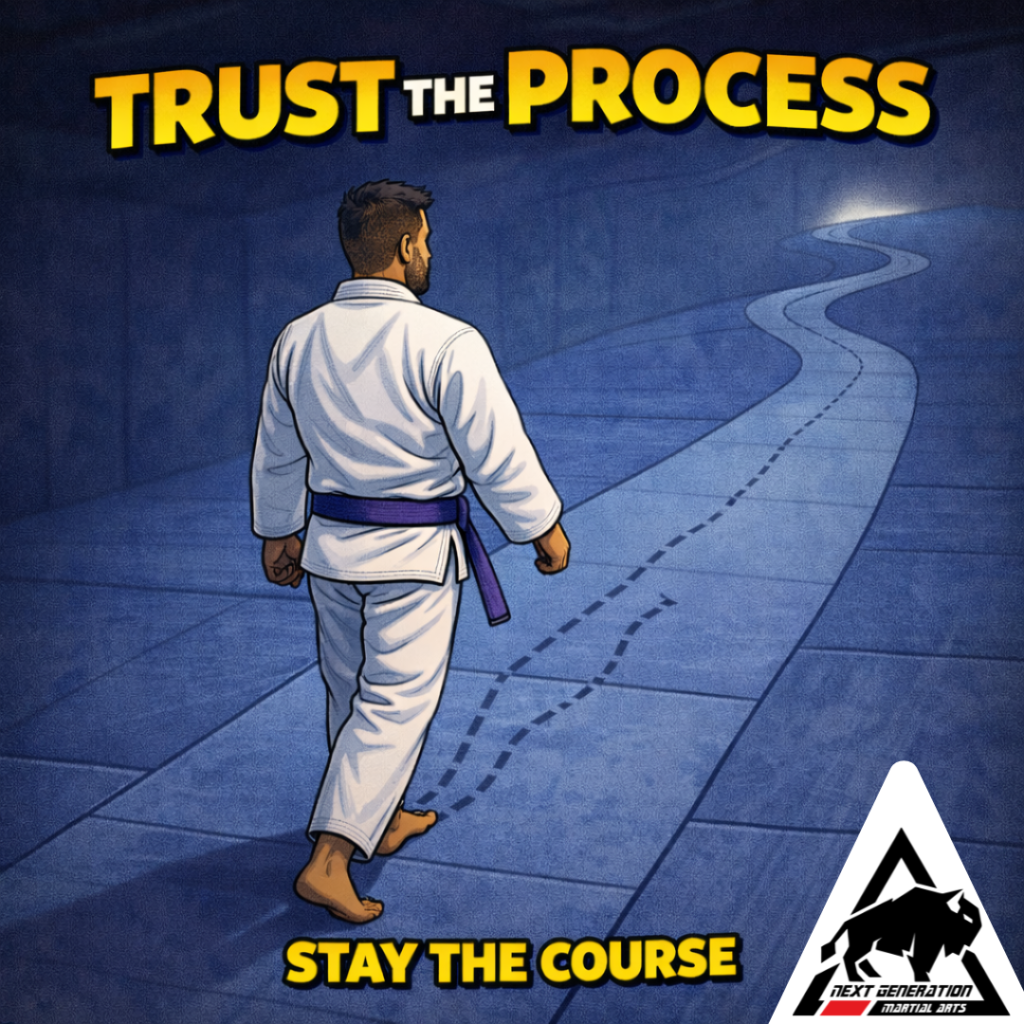
Trusting the Jiu Jitsu Process When Progress Feels Slow
After consistency begins, many adult Brazilian Jiu Jitsu students in Thibodaux reach a confusing stage. They’re showing up. They’re training regularly. Yet they still struggle with some of the same movements or positions that felt difficult weeks ago. It’s easy to assume this means nothing is changing.
In reality, this is often the moment when progress starts to take root.
During the early months of training, progress doesn’t always have a clear look—but it almost always has a clear feel. Feeling more comfortable on the mat is progress. Anxiety beginning to fade is progress. The ability to breathe, think, and stay present in positions that once caused panic is progress, even if the outcomes still look the same.
Progress Often Feels Slow Because Expectations Are Misaligned
Most frustration during this phase has little to do with skill and everything to do with expectations. Many adults are conditioned to expect fast results—quick fixes, accelerated systems, or dramatic breakthroughs. That mindset doesn’t translate well to jiu jitsu.
Slow progress does not mean stalled progress. It usually means steady growth in the right direction. Like a long-term investment, improvement trends upward even when day-to-day changes feel small. Or like an airplane rather than a rocket, progress builds gradually before it ever becomes obvious.
When expectations are set too high, even real improvement can feel like failure.
Why Defense Improves Before Everything Else
One of the most misunderstood parts of early training is defensive development. Many students feel like they’re “losing” because they still find themselves in inferior positions. What they don’t recognize is that being in those positions longer—without panic—is a sign of growth.
Defense often improves first, but it’s invisible if you’re only measuring success by taps or dominant positions. Staying calm, recognizing danger sooner, and knowing that you’re okay even when uncomfortable are major wins. Getting comfortable being uncomfortable is part of the process.
What Trusting the Jiu Jitsu Process Actually Means
Trusting the process is not passive. It doesn’t mean searching endlessly for shortcuts or buying into whatever promises the fastest results. That kind of thinking often feeds the easy side of the brain—the part that wants progress without patience.
Trusting the process means believing in what you’re learning and trusting yourself enough to do the work. It means showing up, training with intention, and understanding what training actually is. Over time, students who trust the process start asking better questions, not because they want quick answers, but because they’re engaged in their own development.
How Coaches See This Phase
From a coaching perspective, this phase is often where real growth begins. Daily effort matters. How a student handles adversity matters. These habits form long before any visible recognition.
When someone earns their first belt, newer students often assume that moment came easily or quickly. What they don’t see are the months of quiet decisions made beforehand—the choice to show up consistently, to stay through discomfort, and to keep training when progress felt slow.
Without understanding that context, it’s hard to appreciate what promotions truly represent.
Stay the Course
Many students quit right before a breakthrough. This phase—marked by doubt, trial, and internal struggle—is often the final test before clarity arrives. Rank reflects a personal journey. No one can walk it for you.
This is your path. It’s your journey to navigate. Stay the course.
Are you ready to start training jiu jitsu today?
Sign up for adult Brazilian Jiu Jitsu training here
Next Generation Martial Arts in Thibodaux