
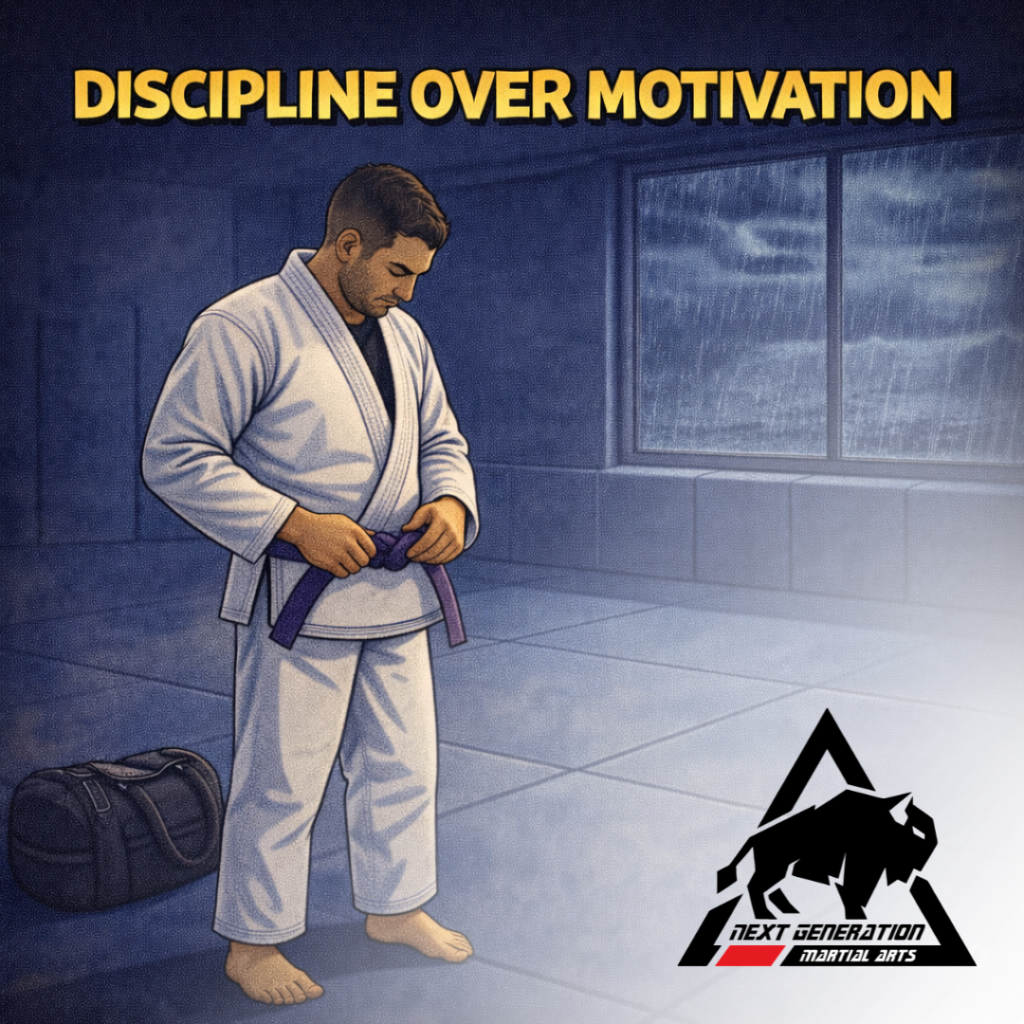
Discipline Over Motivation
Motivation is often what brings adults into training, but it is rarely what keeps them there. Motivation is temporary. It fades as life gets busy, stress builds, and training becomes less novel. Most people who stop training don’t quit suddenly—they drift. Attendance slowly declines until embarrassment and doubt make returning feel harder than leaving.
This is where discipline matters.
Motivation Is a Temporary Fuel
Anyone can feel motivated to learn submissions, takedowns, or escapes. Motivation is an external source of fuel—it depends on mood, energy, and circumstances. Discipline is different. Discipline is internal. It does not rely on how someone feels on a given day.
In jiu jitsu, discipline is what allows students to continue training long after motivation has lost its grip. Over time, disciplined students begin to realize that the technical side of jiu jitsu is only part of what the art is teaching. The deeper lessons come from consistency, restraint, and self-awareness.
When Motivation Fades, Frustration Shows Up
One of the first signs that motivation is running out is frustration. Students struggle to let go of the weight they carry from outside the academy—stress from work, family obligations, or personal challenges. When they can’t detach and be present, training becomes harder than it needs to be.
This is not a technical problem. It’s a discipline problem.
Discipline allows students to show up even when they don’t feel ready, even when excuses are available. Without it, inconsistency becomes the default, and inconsistency quietly undermines progress.
Discipline Looks Like Quiet Consistency
Discipline is rarely loud. It doesn’t announce itself. It shows up as quiet consistency—regular attendance, steady effort, and a calm demeanor regardless of outcome.
A well-structured curriculum and a strong community exist to support this process, but no program can eliminate struggle entirely. Discipline is still a personal responsibility. Students who rely on motivation alone often become inconsistent. Those who develop discipline find a reason to train that grounds them beyond the mat.
Training Becomes a Mirror
As discipline develops, training begins to reflect something deeper. It becomes a mirror—showing students both strengths and limitations. For many adults, this process becomes a form of self-therapy. It reveals patterns of avoidance, frustration, and self-doubt, along with resilience and growth.
At this stage, identity matters. Students begin to confront whether they believe they are worth the effort training requires. Those who answer yes find a way through boredom, difficulty, and discomfort. They learn that these moments are not obstacles, but opportunities for internal growth.
Why Discipline Shapes Long-Term Success
Everyone starts with different natural abilities. Discipline is what allows individuals to refine those abilities over time. Growth does not appear all at once—it compounds quietly, often unnoticed.
Students who endure struggle consistently are the ones who last. Discipline doesn’t create dramatic changes overnight, but it builds something far more reliable: the capacity to stay the course.
This is your path. Discipline gives it meaning.
Click Here to Start Walking Your Path
Next Generation Martial Arts in Thibodaux
Ownership and Personal Responsibility | Jiu Jitsu Training Mindset