
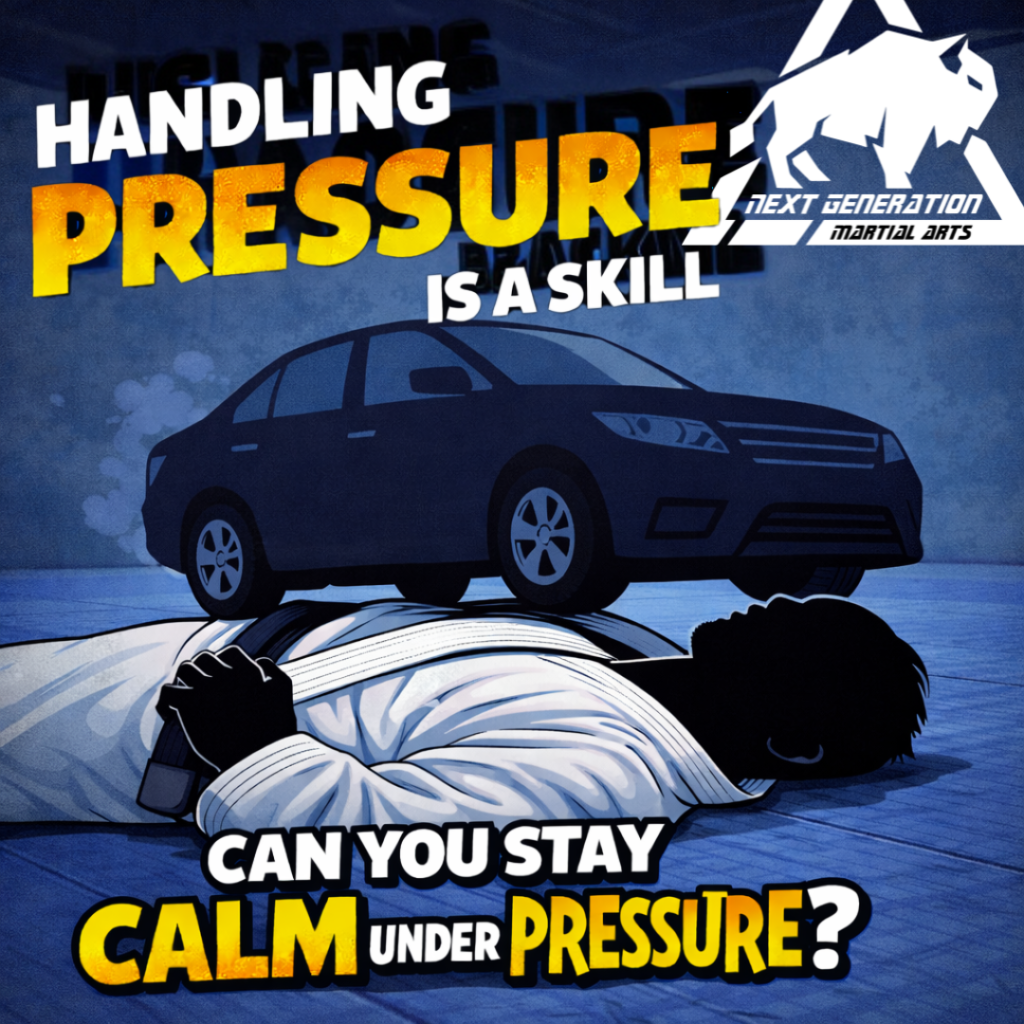
Handle Pressure Without Losing Control
Pressure in training is rarely just physical. While it may begin with weight, pace, or intensity, what it truly tests is emotional control. The body feels stress — but the reaction is almost always emotional first.
Learning to handle pressure is not about avoiding it. It is about growing through it.
Physical Pressure Triggers Emotional Response
Rolling hard and rolling reckless are not the same thing. Yet the two are often confused. What feels excessive to one person may feel appropriate to another. Much of this comes down to emotional comfort under stress.
Pressure increases strain on the body. But the real lesson lies in how the mind responds to that strain. Students who improve in this area begin to realize that pressure is not the enemy. It is feedback.
You learn from pressure.
Intensity Is Not the Same as Emotion
An emotional reaction comes from a lack of control. Intensity, on the other hand, comes from the ability to burn hot without losing composure.
Controlled aggression is not about dominance. It is the ability to increase pace and pressure when it is needed — and only when it is needed. That word matters. Different people require different levels of intensity to grow. A mature practitioner learns to adjust accordingly.
Self-control is developed under stress, not in its absence.
Why Students Struggle With Pressure
Some students escalate rounds because they feel the need to win to protect their confidence. Others shrink away from intensity altogether, often due to past experiences or unfamiliarity with higher stress environments.
Both responses are rooted in ego.
Ego can cause someone to cling tightly to their current identity, resisting growth because vulnerability feels threatening. Or it can cause someone to retreat from intensity because fear feels safer than exposure.
Neither leads to long-term development.
What Pressure Actually Teaches
When students remain composed under pressure, they discover something important: they can handle more than they believed. Confidence grows. Anxiety decreases. Decision-making improves.
Over time, students mellow. They become steadier in training and in life. Emotional regulation on the mat carries into daily stress. This is not accidental. It is the result of repeated exposure handled correctly.
Promotions and Emotional Maturity
Emotional regulation is foundational for advancement. Higher belts are not defined by how hard they can push, but by how well they can control that push.
Newer students often misunderstand intensity from upper belts. They may assume anger or frustration when, in most cases, the upper belt is simply training at a level required for their own growth. Controlled intensity is often therapeutic maintenance, not hostility.
Students who learn to regulate themselves at higher levels progress further and last longer.
Control defines maturity.
Ready to train with purpose?
Click here to take the first step and join the jiu jitsu Thibodaux
Being a Good Training Partner Is Leadership | Jiu Jitsu Training Mindset
Stay Calm Under Pressure: Learning Control in Jiu Jitsu Training